Steel Surface Treatment
There are several important reasons to treat steel surfaces. Visually, it enhances the appearance of your finish steelwork, creating a more polished and appealing look. More importantly, it provides essential protection against scratches, peeling, and corrosion in the sometimes extreme New Zealand climate, preserving the steel’s structural integrity.
At Rotorua Steel Structures, we offer a wide range of metal surface treatments. While zinc phosphate primer is commonly used for steel, we can provide various finishes to meet the specific needs of your project.

The Range of Steel Surface Treatment Options
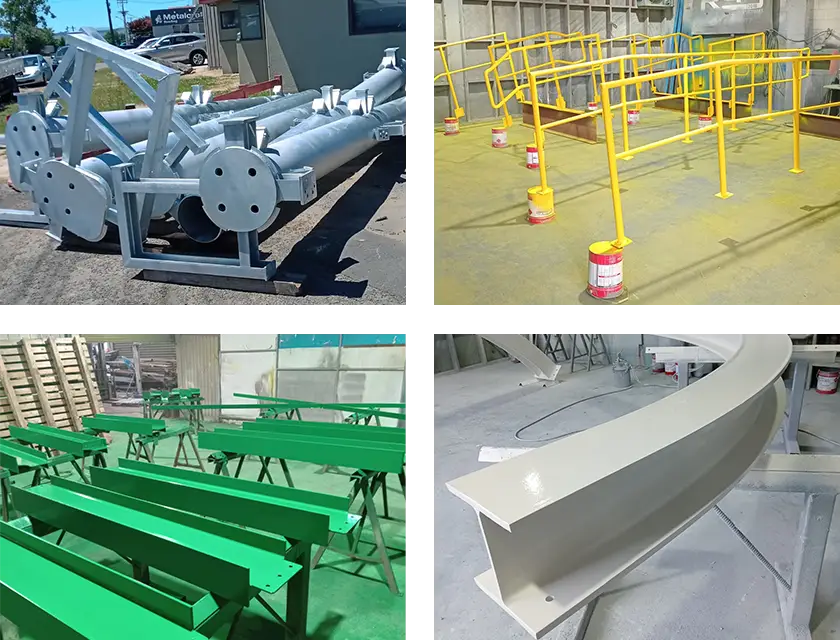
Our standard metal treatment is the zinc phosphate primer, as per industry standard. But we know from experience that different projects require different treatments, so we also use several other methods as requested. Here are the various treatments we use at Cedar Steel and the differences between them.
Zinc Phosphate Primers
Steel beams must be protected to prevent corrosion and wear from the elements. This specially formulated primer is one of the most popular surface hardening treatments available.
Powder Coating
Electrostatic or compressed air is used in this unique method to apply a special powdered coating. This powder is then cured, forming a film over the metal. Then it is dried, creating a hard, durable finish that is extremely resistant to UV rays and rust, and cracking and peeling from the elements.
Hot Dip Galvanised Finish
Another surface treatment process for steel is the galvanised finish. This treatment offers long-lasting protection against all of New Zealand’s harshest climates. This method can be used for any size or shape of steelwork or metalwork, as it involves sinking the steel into a tub filled with molten zinc. This zinc is heated to temperatures of 450 °C, which then forms a protective coating around the steel. This is another popular option for surface treatment.
Hot Zinc Spray
This option doesn’t allow for quite the same protection as the galvanised steel zinc bath, but it is a popular option because it creates an extremely smooth finish on the steel. In this method, zinc is blasted onto the steel according to specs, usually between 50 and 100 microns. This is a good option for fences and railings.
RSS works with selected supply partners for whichever method you choose to ensure metal coating meets project specifications.
Ready to bring your project to life with precision and expertise?
Contact us today to discuss your project and discover how our personalised solutions can meet and exceed your expectations. Let’s build success together!